Sunday, September 3, 2017

The 71st Philippine Orchid Society Midyear Show

Albino form of the Vanda sanderiana
(photo by Rommel Arriola)

Once again, the onset of the rainy season, especially the almost 2- week-long continuous rain or “siyam-siyam, is the mark of season of the most awaited midyear orchid show here in Quezon City, Metro Manila, Philippines.  During this time, most true orchid enthusiasts are very excited as it is the climatic requirement for the flowering of one of the grandest and important Philippine orchid species, the Waling-Waling or the Vanda sanderiana.


The common Vanda sanderiana 
(photo by Rommel Arriola)


For some, the Waling-Waling can also be scientifically identified as Euanthe sanderiana (its synonym) due to its peculiar spurless labellum in its flower, as most Vanda has a spur. This magnificent and beautiful orchid is now being used as a parent for the breeding of modern vandaceous orchids, in order to acquire the flatness and roundness of standard cut-flower vanda orchids.

Euanthe sanderiana is only known from the island of Mindanao, and populations have been recorded from the provinces of Davao, Cotabato, and Zamboanga. It grows as an epiphyte on the trunks and large branches of old-growth forest trees at elevations up to 500 meters. Due to the destruction of the original rainforest. It is highly doubtful if there are any wild populations remaining of this most wonderful Philippine orchid species. Last February 4th 2013, the Philippine Senate made Euanthe sanderiana the “National Flower of the Philippines.” Along with the Sampaguita, The Waling-Waling is one of the most fitting tribute to one of the most wonderful Philippine orchid species. This orchid is also known as the Queen of all Orchids.

Due to over collection, and the rapidly disappearing forests in the lowlands, Euanthe sanderiana is in extreme danger of going extinct in its natural habitats if it is not already). We strongly advise orchid growing enthusiasts to obtain their plants from respectable orchid nurseries, which have grown their plants from seed. You will find that plants grown from seed will adapt more easily to cultivation.

The Waling Waling is actually easy to cultivate. Here are some of its basic requirements.

Light. Plants will require a semi-shaded area, and will benefit from a net house with 2-3 layers of shade net. Plants are usually hung or established on wire, plastic baskets or on driftwoods.

Watering. Waling-waling prefers and tolerates a little bit drier condition. Water the plant once a day or even less, like once every other day, and keep the surroundings and companion plants moist to provide high humidity.

Ventilation. Provide the plant with a slightly breezy location, but protected from very strong winds. Air movement will prevent the plant from rotting specially during the rainy season.

Potting Media & Potting Technique. Vanda sanderiana can be potted on plastic or hardwood baskets (hanging), tree fern slabs, or in drift woods, with their root well exposed and dangling down. They can also be grown in coarse brick and charcoal mixtures in pots, on benches, or hanging, in which case they can also be grown in hardwood baskets with little or no potting mixture. The roots are thick and will grow out of the pot or other container; hanging plants often develop a mass of pendent aerial roots. Such plants do well, but must be kept moist. This can mean misting the plants several times daily, since without potting material to retain moisture, the plants will dry out rather quickly. They will not tolerate wet roots, but do well when hung over wet rather than dry ground.

Fertilization. Use orchid foliar fertilizer, and spray recommended dose once every week usually after watering, or more often as long as the dosage is reduced. A teaspoon of balanced orchid foliar fertilizer in a gallon of water and sprayed once a week, especially in the morning is sufficient.

Pest & Diseases Management. Waling-waling plants are susceptible to sucking insects like mites, aphids and scales. Spray a dilute solution of Perla soap to protect the plant from insects or spray Lannate or Sevin insecticide if heavy infestation occurs. During rainy season, spray plants with dilute solution of Captan or Dithane fungicide to protect plants from rotting due to water-borne fungal diseases.

Propagation. This plant can be propagated by top cutting. Sterilize all cutting instruments first by washing with soap and water and squabbling with isopropyl alcohol before using to prevent transfer of viruses. Top-cuts are repotted on plastic or wooden baskets or clay pots with charcoal. Seal wounds with fungicide paste and do not water top cuttings for 3 days to prevent rotting. Water afterwards to induce establishment of roots. New shoots will usually sprout from the severed stem. Fertilized with foliar fertilizer to make plants healthy. It can also be propagated by seeds. Flowering season is August-September, andwith this, flowers can be pollinated in order to produce fruit capsules with seeds which will usually be ready for harvest at about 5 months after pollination. Seeds from fruit capsules can be sown inside the laboratory, in sterile artificial nutrient media, using embryo culture techniques. Selected forms can also be micropropagated using meristemcultured or culture of young inflorescence.

September and October is the flowering season of the Vanda sanderiana, and with this, the Philippine Orchid Society regularly schedule its Midyear Orchid Show during this time, to celebrate the blooming of this unique orchid. Aside from the POS, Davao also has its Kadayawan festival to celebrate the same.

In celebration of its 71st anniversary The Philippine Orchid Society featured its Midyear show from September 2 to 16, 2017, showing off the lovely orchid blooms of the Queen of all Orchids in its finest.   


Historically, the plant was discovered by a European, Mr. Cari Roebelin, in July 14 1880. He worked as a plant collector for Frederick Sander, who had the largest orchid plant nursery in Europe, during that time. Heinrich G. Reichenbach described this orchid species in 1882, in the Gardeners’ Chronicle, and he gave it the name of Vanda sanderiana in tribute to Mr. Sander.

The normal Waling-Waling has pale pink dorsal sepals and petals with some dark spotting toward the center, the lateral sepals are greenish brown with darker brown tessellations. However, the rare alba form has yellowish green lateral sepals instead of the usual greenish brown. The alba-form plant commands a higher price compared to the usual pinkish maroon Waling Waling.


Philippine Orchid Ribbon cutting: L-R: DENR ASEC Nonita S. Caguioa, Hon. Sen. Cynthia Villar, Ms. Vangie Go (POS President) & Sensei Ryugetsu Nakagawa cut the ribbon cutting.

This show, which is being held in cooperation with the Quezon City government, will be held at the Flower Garden of the Quezon Memorial Circle, Elliptical road in Quezon City. Together with the sought after waling-waling, the show will feature the best orchid collections of the country’s best orchid growers set in exquisite landscapes. Lectures on orchid and plant culture will be held daily for free and a plant bazaar selling orchids, ornamentals, bonsai, fertilizers, pots, and many more at farm gate prices will be on site.


Free daily lectures begins at 2:00 in the afternoon:


here are some of the featured pictures...


Friday, January 15, 2016

The 70th Philippine Orchid Society’s Annual Orchid and Garden Show


The cool months of December, January and February are the blooming season of the orchids Phalaenopsis, together with cool temperature respondent orchids like the Cattleya, Grammatophyllum, Dendrobium and some Vanda species.   The blooming season of this gorgeous plants marks the opening celebration of the Philippine Orchid Society, or commonly known as “POS” during the first quarter of the year.  The date chosen was February 25 to March 7, 2016 at the iconic Quezon Memorial Circle (at the Flower Garden area), in Diliman, Quezon City.  Aside from orchids, other plant types like cacti, bonsai, bromeliads, ferns, tree seedlings, fruit trees, garden accessories, pots and fertilizers will also be displayed as well.

Phalaenopsis orchids are one of the orchid groups in bloom during this season.

With the theme: “Bridging Bridges Through Orchids”, the event intends to gather plant hobbyists and enthusiasts, under roof.   Its actually a garden exhibit,  trade fair,  and an educational venue with free lectures rolled in one.  The exhibit intends to showcase the beautiful orchids that we have in the country, which were meticulously cultured and flowered by our very own orchid connoisseurs.  Blooming orchids will be displayed in landscaped exhibits and also through flower arrangements.  On the other hand, the society have also included an animal and pets area which will showcase small birds, insects, and small mammals  on exhibit in addition to plants.

The fragrant Philippine species Dendrobium anosmum or "Sanggumay" is also one of 
the species in bloom during this season.

Here are the list of Free Lecture Series for this season;


The show aims to promote the country’s horticultural industry, hoping to make it sustainable and progressive.  The POS is continuing its mandate of promoting not just orchids, but also gardening as a whole and the appreciation of nature. Year after year, it has facilitated the promotion and dissemination of technical information for both orchids and other ornamental plants through these events.  This is due to the fact that aside from providing aesthetic beauty, orchids are also efficient carbon dioxide absorbers and is regarded as one of the gratifying and socially-fulfilling hobbies of most housewives and plant enthusiasts due to the plant’s exotic and diversified flower types.


Students and Teachers in Biology and Botany are some of the usual visitors in the garden shows, aside from the orchid enthusiasts, plant-loving housewives and plant collectors.

Daily lectures on orchid and plant culture will be held for free and a plant bazaar selling orchids and ornamentals at farm gate prices will be on site.

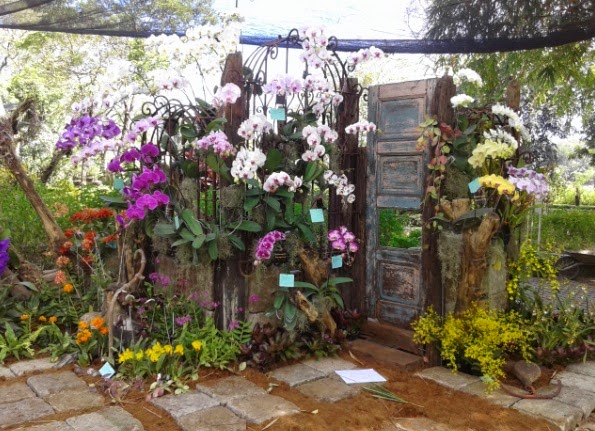
Here are sample exhibits from previous events at the orchid show, just a glimpse of what to see and expect at the site.


For more information you may call the POS Secretariat at telephone numbers 929-4425 or 09178485468 or email at philorchidsociety@gmail.com.  Orchids and animal pets are certainly colorful and interesting.  So, why not come and visit and see for yourself? Come and bring along your family, and do not forget your cameras.

An beautiful and majestic orchid display exhibit
 made by Ms. Vangie Go


Come and visit us at the 70th Philippine Orchid Society's Annual Orchid Show.  Also you might want to join as a member of the Philippine Orchid Society.  See you there! Don't forget your cameras and bring friends and family.

--------------------------------------
Article by: Norberto R. Bautista
For inquiries, kindly email me at
norby.bautista@gmail.com

Powered by:


The Exotic and Popular Phalaenopsis amabilis


       The Phalaenopsis amabilis orchid, which is commonly known as the moth orchid, or in Filipino, the ‘Mariposa” orchid is a gorgeous Philippine orchid species very important in producing today’s modern standard Phalaenopsis orchid hybrids.  Its flower shape is like large moths or butterflies flying in the air.


       Taxonomically, the species was first discovered on a small island off the east coast of New Guinea by botanist Georg Eberhard Rumphius in 1653 but named it Angraecum album majus. It remained undiscovered until 1825 when Karl Ludwig Blume discovered the same species and gave it the name it is presently known. This species is usually found in the eastern to southeastern regions of Asia, including the Philippines,

       Phalaenopsis amabilis plants have a uniform structure that makes the species easy to  identify by novice botanists. This orchid species, like most Phalaenopsis, has a short stem. The rooting of Phalaenopsis amabilis is usually unbranched except if the roots are damaged or if the individual plant has gotten old in age. The fleshy leaves of P. amabilis vary from oblong to elliptic at the base and obtuse, minutely, at the tip or apex and measures at 50 × 10 cm. The orchid's flowers are showy, membranous, white, the lip or labellum are three-lobed, and the callus have a variety of yellow and red markings. The species usually blooms during the first quarter of the year, as it responds to the cold temperature, and is able to bloom for a long period of time, about 1 to 1-1/2 months long and can grow up to 10 cm in diameter.

           Phalaenopsis amabilis reproduces sexually by producing a seed pod filled with dust-like seeds when flowers are pollinated.  Its flower are usually pollinated by large bees from the genus Xylocopa. For this particular species the pollination frequency is very high, usually 50%, and produces thousands of seeds.

            The plant is easy to grow but needs to be protected from direct sunlight and long periods of rain.  Cultivated plants are usually established in clay pots, plastic pots, in driftwoods, flat deadwoods, tree fern roots or slabs, or coconut husks. Plants can be attached and established in live trees, and coconut palms or the Manila or MacArthur palms.

            Phalaenopsis orchids prefer a semi-shaded or 50% shaded location, and should not be exposed to areas with continous rains, especially during the monsoon months.  Plants needs to be water once every day as they do not have pseudobulbs which can store water.  It is recommended to weekly spray plants with a dilute complete orchid foliar fertilizer for optimum growth.

            Like all Phalaenopsis, its succulent leaves needs to be protected from sucking insects like thrips, mites, aphids, and also from caterpillars which tend to chew on its tender leaves and young inflorescences.  For insect infestation, plants are preferably sprayed with a recommended dose of systemic insecticides like Lannate and Sevin and also a weekly spray of dilute fungicide like Captan and Dithane during the rainy season to prevent rotting.  Spider mites can be controlled by a dilute concoction of soapy water solution or commercially by a miticide like Ascend or Omite.

            Floral stems are is usually cut when withered or when the blooming season has completed.  The plant is propagated by removing the plantlets which have developed from the old floral stems.  Commercially, plants are mass produced through seeds, usually in a laboratory using orchid embryo culture technique.

            The Mariposa orchid is a popular orchid plant among common and specialized orchid enthusiasts, due to its ease of growing and its seasonal show of magnificent white flowers.  This orchid has been used both in landscaping and also in garden shows as a specimen plant.  The species is also used as a breeding stock in the development of modern Phalaenopsis hybrids of today.  The Mariposa orchid is nowadays mass propagated in Taiwan, but also found in the Philippines, in the United States of America and a favorite among European countries.   The plant is used both as a home and office decoration, and often given as exotic gifts for the plant symbolizes the qualities of refinement, friendship, perfection, numerous progeny, all things feminine, noble, and elegant.

            If you would like to see this orchid types, and other orchid hybrids, they will be used as landscaping materials in the upcoming 70th Annual Orchid and Garden Show of the Philippine Orchid Society from February 25 to March 7, 2016 at the Flower Garden Area, East Avenue Gate, Quezon Memorial Circle, Elliptical Road, Diliman, Quezon City.  For further details, you could contact the POS Secretariat Ms. Jenny Rivera at 0917-8485468, Landline 957-3524 or email philorchidsociety@gmail.com


Contact us at: 

Unit 209 Delsa Mansion, Brgy. South Triangle
Quezon City, Philippines

Powered by: Home Gardening PH


Friday, August 14, 2015

Learning about Orchids, Plants and Gardening at the Philippine Orchid Society’s 2015 Midyear Garden Show


For most orchid and plant enthusiasts, the rainy months of August and September are signs of the seasonal and much-awaited event in the Philippine Orchid Society (POS), the Midyear Orchid and Garden Show. Perennially scheduled in time during the blooming season of the world famous ‘Waling- Waling’orchid, or scientifically known as Vanda sanderiana,  the event highlights the promotion and revival of the hobby and technology in orchid growing and also plant growing in general.  The ‘waling- waling’ orchid is renowned world wide as the ‘Queen of all Orchids’ because it has greatly influenced the breeding of modern day orchids that are very popular in the orchid cut-flower and potted orchid trade.  With it, the event is the Philippine Orchid Society’s continuing mission of disseminating cultural information in growing our very own orchids, and also promotion of gardening to Filipinos. 


In celebration of its 69th Anniversary this coming August 28 to September 07, 2015, the POS will be showing off the lovely blooms of the ‘Queen of all Orchids’ in its Mid-year Orchid and Garden Show with the theme:  ‘Enriching Lives and Building Opportunities Through Orchids”.  This show, which is being held in cooperation with the Quezon City Government  will be held at the Flower Garden of the Quezon Memorial Circle, Elliptical road in Quezon City (near the East Avenue gate entrance).  Together with the sought after ‘waling-waling’, the show will also feature the best orchid collections of the country’s active orchid growers  meticulously arranged in exquisite landscapes. Daily lectures on orchid and plant culture will be held daily for free and a plant bazaar selling orchids, ornamentals, cacti, bromeliads, seeds, seedlings, bonsai, fertilizers, pots and many more at farm gate prices will be on site.


The  free daily lectures will be held every 2pm. Topics includes: August 28 (Fri) Growing Orchids in your Garden by Mr. Andres S. Golamco, Jr.; 29 (Sat) Flower arrangement for all occasions Speaker: to be announced; 30 (Sun) Vandaceous Orchids species by Mr. Wally Suarez;  31 (Mon) Basics in Landscaping by Mr. Jimmy Floro; September 01 (Tue) Edible Ornamental Vegetables by Mr. Ponchit Ponce-Enrile;  02 (Wed) Cactus & Succulent propagation by Mr. Lino Rom; 03 (Thu) Hoyas as companion crop of orchids by Mr. Fernando ‘Nanding’ Aurigue;  04 (Fri) The Importance of a good substrate by: Allied Botanical Corporation; 05 (Sat) Growing Orchids for Fun and Profit by Ms. Evangeline B. Go; 06 (Sun) The Exotic species and Hybrids of the Cattleya Alliance by Atty. Hernando B. Perez;  and  07 (Mon) Controlling Plant Pest & Diseases during Rainy Season by Mr. Norberto R. Bautista.


Come and join the said event and appreciate the array of beautiful and colorful flowers and plants. Let us promote the country’s horticultural industry and make it sustainable and progressive.  Put it in mind that aside from providing aesthetic beauty, orchids and garden plants are also efficient carbon dioxide absorbers, in addition to forest trees.  Also, gardening is one of the gratifying and socially-fulfilling hobbies of most housewives and plant enthusiasts due to the plant’s exotic and interesting beauty, which alleviate stress from the hectic and active city life.


Show entrance is at Php50.00 and Php40.00 for students & senior citizens.  The garden show  will be open from 8:00am – 6:00pm daily. For more information you may call the POS Secretariat at mobile numbers 957.3524 or 09178485468 (kindly look for Ms. Jenny F. Rivera or Mr. Jiffy A. Alegre).

Article by; Norberto R. Bautista
For inquiries, kindly email me at
norby.bautista@gmail.com


Powered by:


Saturday, February 28, 2015

Enjoying the Beauty of Plants and Flowers at the FLORA FILIPINA EXPO

Enjoying the Beauty of Landscaped Plants and Flowers
Opening of the 4th Flora Filipina Expo


            The 4th Flora Filipina Expo opened last February 25, 2015 at the Hardin ng mga Bulaklak in Quezon Memorial Circle, showcasing the beauty of Philippine plants and flowers.  The event was made possible through the efforts of the Philippine Orchid Society in partnership with the Quezon City government  , the Quezon Memorial Circle, Department of Tourism, Department of Agriculture, Del Monte-Philippines,  KFC,  Allied Botanical Corporation , Ramgo International , the Philippine Bonsai Society, the Philippine Horticultural Society, The Los Banos Horticultural Society, the Orchid Society of Davao and other major garden clubs in different parts of the country.


            The ribbon cutting was participated by guest of honor Ms. Camille Villar, daughter of  Congresswoman Cynthia and Senator Manny Villar, Mrs. Evangeline Go, President of the Philippine Orchid Society, Mrs. Cora Purificacion, Flora’s honorary chair, Mrs. Dorene Dofitas, Flora’s chairperson, officers of the Philippine Orchid Society and from the various garden clubs, representatives from the Quezon City government and various plant aficionados.


            Guests were first toured around the colorful and magnificent array of landscaped exhibits before all settled in the shaded opening stage area. The opening ceremony was later joined by guest of honor Quezon City Vice Mayor Joy Belmonte-Alimurung and Dra. Elenita Binay, wife of Vice President Jejomar Binay and Flora’s honorary chair..


            With these event, the site was transformed into a garden paradise, with colorful pocket gardens of orchids, bromeliads, tillandsias, ferns, annuals, aroids, bonsai and cacti. It is a wonderful site for taking pictures or for strolling and admiring the beauty of plants around.


            The expo was also a venue to determine the best plants and also for landscapers to compete on their skill in arranging plants.  Winners of the best landscape exhibits and also winners of the best orchids and ornamental plants were also announced and awarded with trophies and ribbons.


            The opening ceremonies were attended by more than 200 people who viewed the 15 landscaped garden exhibits. There were numerous commercial garden booths selling various plants and garden accessories like orchids, bromeliads, tillandsias, fruit tree seedlings, ferns, annual flowering plants, bonsai, aroids, pots, potting mix, fertilizers, pesticides, garden tools, and a lot more. The festive atmosphere at the Hardin ng mga Bulaklak area was further enhanced by a music Band of Quezon City and cultural performers from the Commonwealth High School presented a Filipiniana and Muslim dances after the opening rites.


            The Flora Filipina Expo was intended to promote and highlight the country's ornamental and floriculture industry to the world. With this, we hope that our Asian, European and American neighbors will recognize our potential in growing quality and beautiful plants and flowers.


            With its theme: “Enriching Lives and Building Opportunities through Floriculture ”, the expo aims to promote the use of Philippine  plants in indoor and outdoor gardening, especially in landscaping.


            There was also a two-day conference at the Great Eastern Hotel at Quezon Avenue held last February 26-27 which was attended by our very own plant enthusiasts, gardeners and researchers from around the country. Topics on various new innovations in horticulture and the new plant cultivars developed were presented in the conference.


            Through the expo, the Philippine Orchid Society is continuing its mandate of promoting not just orchids, but also gardening to our fellow Filipinos. Hopefully, the passion and skill in floriculture, and ornamental horticulture will continue to be passed on to our younger generation for a brighter and progressive future.


            The Flora Filipina Expo will be open from February 26 up to March 9.  There will also be an ongoing free daily lectures on gardening at the exhibit site. The organizers are hoping to stage again another Expo on 2018. For inquiries, kindly contact the Philippine Orchid Society at telephone (02) 929-4425 or mobile 0917-8485468.


________________________________________
Article by: Norberto R. Bautista
For inquiries, kindly email me at
norby.bautista@gmail.com


Powered by:


Saturday, February 21, 2015

Culture Tips in Growing the Phalaenopsis Orchid

CULTURE TIPS IN GROWING THE PHALAENOPSIS ORCHID


Butterfly Orchids or Phalaenopsis, are one of the most graceful and elegant group of orchid. It is locally known as mariposa or moth orchid, as its flowers resemble butterflies in flight. It is one of the most common orchid plant in the country and also in Asia, Europe and America . In fact, the Philippines is the center of Phalaenopsis orchid diversity in the world, since half of the Phalaenopsis species and varieties worldwide are found in our country. It is actually easy to grow and it takes a relatively short time to flower.

However, the Philippines , most hobbyists are having difficulty in growing this orchid due to the fact it has a different cultural requirement compared to Vanda and Dendrobium orchids, specially for its requirement for light and water. Phalaenopsis requires shade, and do not like too much water, as it excessive watering tends to cause the plant to rot.

The genus name Phalaenopsis came from the Greek word ‘phalaena’ meaning moth, and ‘opsis’ meaning appearance. Out of the 42 species and 36 varieties, 20 species and 18 varieties are found locally. Many of our Phalaenopsis species have been ancestors of modern Phalaenopsis hybrids. There are more than 40,000 hybrids in this genus and there are more hybrids being registered in this single genus than any other orchid genus. The advantages of growing this group of orchids are: that it is easy to mass produce from seeds, and plants from flasks can be flowered within 8 to 18 months. Phalaenopsis can easily be programmed to flower, by exposing plants to night temperature 10 oC lower than that of daytime temperature and increasing humidity. This is usually done by growing them in cool areas like Antipolo, Tanay, Tagaytay, or Baguio . However, greenhouses can be modified to produce a cool humid environment by evaporative cooling. Breeding and large scale production techniques or protocols for these orchids have already been developed and perfected. There are locations in the country where Phalaenopsis can be grown inexpensively. There is a very wide potential for Phalaenopsis for the foreign market.

Miniature Phalaenopsis hybrids

This is due to the fact that Butterfly orchids offers a wide range of flower color, from white to pink, Greenish, lavander-gray, with flower markings like stripes, spots and blotches. In the United States alone, over 75% of all orchids (flowering potted plants) sold are Phalaenopsis.

Orchid sales worldwide have been increasing and large scale production of potted Phalaenopsis has been done in the Netherlands , Germany, China , Taiwan , United States and Japan. In the US and Europe , Phalaenopsis have replaced the common people’s concept of ‘orchid’, which was once symbolized by Cattleya and Cymbidium. Phalaenopsis is now readily available, affordable and mass marketed in supermarkets.


An ocean of Phalaenopsis orchid hybrids in the farm of VS Orchids, Tagaytay City.

Types. Phalaenopsis orchids are usually categorized either as species or hybrids. Commercial hybrids usually created to follow a ‘standard’ plant form which is typically characterized by large, full and round flowers, in arching flower stalk. They have round or oval thick leaves, in short stems. Flower color ranges from white, semi-alba (white petals and sepals with colored lip), yellow, pink, red, green and lavender, and with flower markings like stripes, spots and blotches. There are also warm and cool growing Phalaenopsis.

General Characteristics. Butterfly orchids has very thick, short stems, and fleshy, soft leaves. The leaves are closely clustered in a two-ranked arrangement and oval-shaped. Inflorescence are either very short to long with drooping to rigidly erect raceme or panicle and bears from one to very numerous and some, mostly large delicate flowers. Phalaenopsis are truly tropical and epiphytic in nature, and they are all very sensitive to direct sun and rain.

Cultural Requirements.

Light. The plant is regarded as a shade-loving plant, thus partial shade or diffused light is required through nets or slat-house. The leaves are easily sun-burned or scorched. The plant can tolerate high light intensities as much as 2,000 foot-candles. The plants are ideally placed indoors or in an area where they will receive morning light, but shaded or protected from direct light during noontime.

Water and Humidity. Phalaenopsis require plenty of water but needs that their leaves and crown be kept dry between watering. Phalaenopsis need plastic roofing or protection from too much rain when grown outdoors during the rainy season. Younger plants require more watering than matured plants. This can be accomplished by misting the plants instead of water sprinkling. Water all matured plants twice per day during very hot and dry months, and only 2-3 times per week during wet months (or none at all). Protect plants from too much rain. For indoor growing, plants are usually watered by immersing the whole potted plant in a bucket of water and permitted to drip dry. The crown needs to be kept dry. Companion plants like ferns, bromeliads, and other foliage plants can be placed near the orchid to help increase humidity. Normal humidity levels in the home is sufficient for Phalaenopsis. However, in an air-conditioned office, humidity levels might be less than ideal. It is also best to place your potted plant over a dish of water with
pebbles so that the pot is not directly sitting on water.

Air Movement. It is necessary to provide enough space between plants and to allow air movement (slight breeze) to help dry the leaves. Using an electric fan to induce air movement in indoor gardens is common.

Flowering. Matured Phalaenopsis plants will flower when exposed to the right temperature and light photo-period. They are seasonal bloomers, usually during months of February and September, however, they can now be artificially induced to flower.

Fertilization. Fertilize plants twice or once a week. Seedlings could be sprayed with very dilute fertilizer everyday after watering. Plants need to be watered heavily once a week to flush excess salts. Wet plants first before applying fertilizers. Follow fertilizer dilution for orchids based on the label, usually at a rate of 1 tsp or less per gallon of water. Use balanced foliar fertilizer with trace elements for orchids.

Growing Media. Phalaenopsis can be potted on clay or plastic pots, with charcoal and coconut husks, or mounted in wooden slabs. Currently, the use of tree fern roots is being discourage for the conservation of our endangered giant tree ferns. Pre-soaked coconut husk is another good medium for Phalaenopsis. Another alternative medium is a 1:1 mixture of sand and coconut choir dust. In this method, Phalaenopsis is treated like a terrestrial orchid, and irrigation is done by placing the potted plant in a basin of water, where water comes up from the bottom up. Phalaenopsis can also be mounted in trunks of living trees like coconut palms, Manila palms, acacia, narra and caimito using U-nail.

Pest and Disease Control. Crown and leaves of Phalaenopsis rots easily if excessively watered. The plant is also sensitive to spider mites infestation. Mites can be controlled by applying miticides (e.g. Omite or Ascend) once a week for 4 weeks. To control crown rot, soft rot of leaves and bacterial spot: fungicide like Dithane or Captan is applied as a prophylactic during rainy season at 3 times a week. Systemic insecticides like Sevin or Lannate are applied when insect pests infestations are presents. For slugs and snails, a molluscide bait can be used.  Visit plants regularly for signs of pests and diseases, especially during the rainy season.

Propagation. Phalaenopsis can be propagated asexually by keikis forming on old flower stalks or on sides of main stem. Top cutting could be done on long drooping Phalaenopsis plants, and after which, new plants will shoot from the remaining stem. Using lanolin paste with Benzyl adenine (BA) on buds in flower stalk to induce keikis has given successful results. Pot keikis in clay or plastic pots with chopped charcoal and coconut husk.

Phalaenopsis can also be propagated sexually through seeds. This can be done by pollinating the selected orchid flower to form a capsule (fruit). However, one has to learn good plant breeding techniques in order to produce good quality plants. The orchid fruit or capsule will mature within 4 months. Then, mature capsules can be harvested and brought to an orchid laboratory, where the seeds can be sown in an artificial nutrient medium using seed culture technology. Viable seeds germinates in a month’s time and seedlings will be ready to be transferred to the nursery in a year’s time. Hundreds or thousands of seedlings can be produced in these way.


PLANTLET INDUCTION IN PHALAENOPSIS


Keiki (pronounced "kay-key") is the Hawaiian word for "baby", “anak” or "child", literally meaning "the little
one". In horticulture, it refers to a plant produced asexually by an orchid plant, usually used when referring to Dendrobium, Epidendrum (sensu latu), and Phalaenopsis orchids. The baby plant is an exact clone of the mother plant, sometimes flowering while still attached to the mother plant.

On a Phalaenopsis, a keiki is a small plant growing from one node along the flower stem. On a Dendrobium, the keiki is typically found sprouting along the length of the cane or from the end of the cane. This is induced by the accumulation of growth hormones at that point, either naturally, or by the application of keiki paste.

The Hormone paste. Keiki paste is a cytokinin hormone (usually Benyzl Adenine or Benzyl Amino Purine) in a Lanolin mixture which induces growth in the node of a Phalaenopsis inflorescence. It should not be confused with paste or powder containing auxins, which are used to force the production of roots.


Application of a benzladenine paste to induce plantlet or keiki development in a Phalaenopsis flower stem

Nodes on Phalaenopsis spikes will form either vegetative growth (keiki) or floral growth (a branch with flower buds). If the node tissue is already differentiated so that it will become a floral branch, there is no way to change the result. The trick is to get the paste onto the node before it is differentiated. However, there is no way to predict if an undifferentiated node will become a keiki or a floral branch.


Remove keikis with roots from mother plant and plant individually on plastic or clay pots

Removing Keikis. If a new plant is desired, the keiki should be left on the mother plant until it develops a healthy root system and have two or three leaves(for a Phalaenopsis) or canes (Dendrobium). At this point, it can be carefully removed with a sharp knife and planted in its own pot. Keikis are cut below and above the stem, leaving a small piece of stem on the baby plant. A separated keiki can be expected to flower in approximately the same amount of time it would take for the cross or species to flower from a seedling. Some species orchids like Phal pulchra keiki frequently and flower while still attached to the mother plant.


Article by: Norberto R. Bautista
For inquiries, kindly email me at

norby.bautista@gmail.com

Powered by: